
Cracking the Code: Dominating the Lake of the Woods Mud Line Transition
When the walleyes and jumbo perch move to the vast mid-winter basins, you need a lure specifically designed to call them in. Enter the XYRA 5G Mud Bugg.
Every Lake of the Woods angler knows the feeling. Mid-winter hits, and the shallow rock reefs that produced easy limits in December suddenly go quiet. The fish haven't disappeared; they’ve transitioned. They’ve moved out to the vast, featureless expanses where the sandy bottom gives way to softer, deeper mud.
This transition zone is the new pantry. The mud holds bloodworms and insect larvae, drawing in massive schools of jumbo perch, and right behind them, hungry walleyes.
The challenge with the sand/mud line isn't a lack of fish; it’s the sheer volume of water. You are looking for needles in a very muddy haystack. To be successful, you need to cover water fast, attract fish from a distance, and trigger lethargic biters in stained, deep water.
This is exactly the scenario XYRA had in mind when designing "Precision Under Ice" tools. And for the mud transition, the weapon of choice is the XYRA 5G Mud Bugg.
Here is how this specific jig tackles the unique challenges of the LOW basin bite.
1. The Need for Speed (The 5G Fast Drop)
When you are hole-hopping across a mile-long mud flat, time spent watching your lure sink is wasted time. You need to get down to the strike zone—usually 25 to 34 feet down on LOW—instantly to see if anyone is home.
The Mud Bugg’s compact 5-gram profile is designed to slice through the water column like a missile. It gets past the slush and gets down to business immediately. This allows you to work more holes effectively, increasing your odds of landing on an active pod of perch or cruising walleyes.
2. Ringing the Dinner Bell (The Ticker Blade)
Mud bottoms tend to dampen sound. A standard jigging spoon might wander silently, unnoticed by a walleye sitting ten feet away in the dark water.
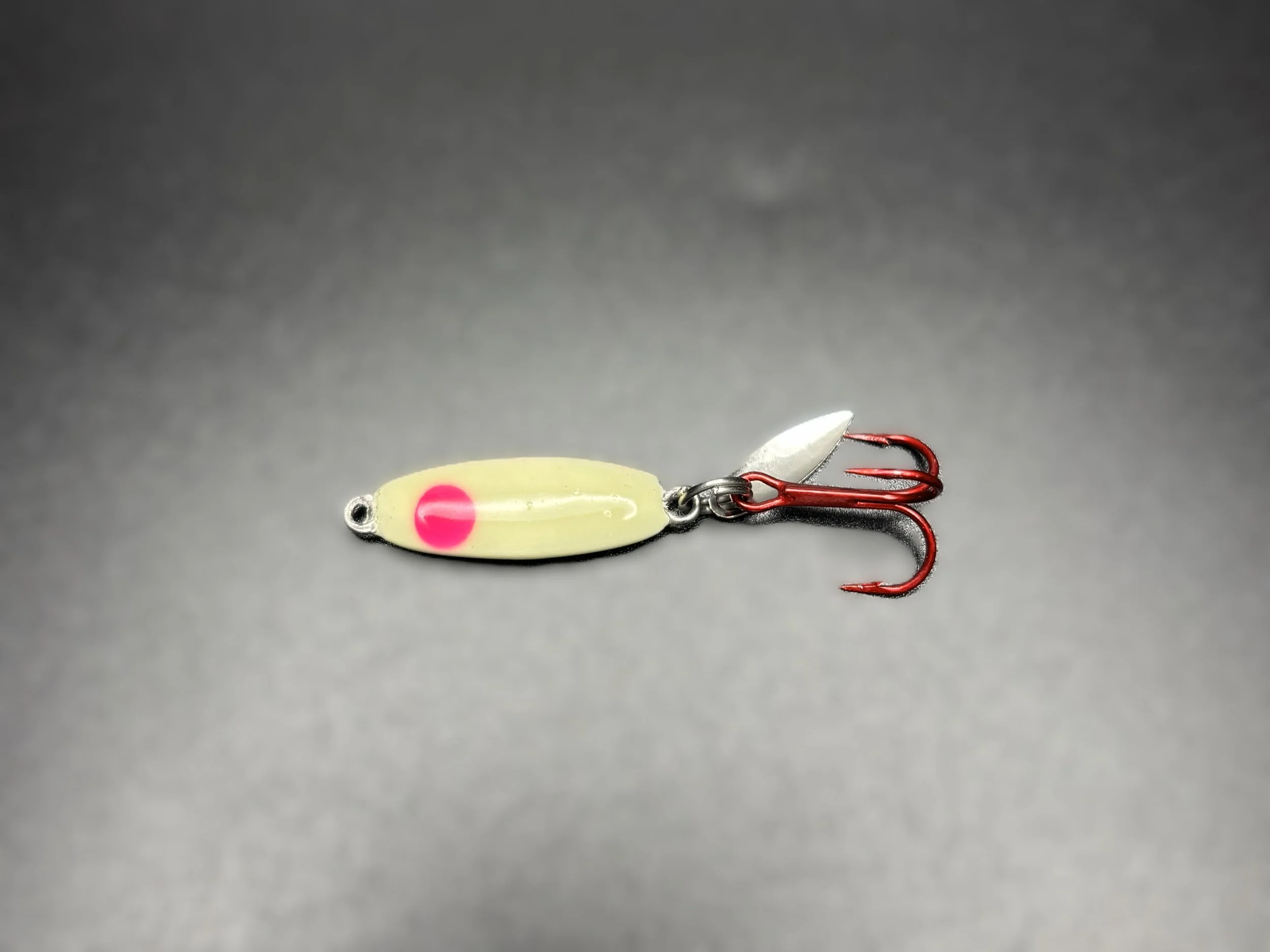
The Mud Bugg changes the acoustic game. It features an integrated "Ticker Blade." As you jig it—especially on the lift—that small blade serves two purposes: it adds seductive flash, and crucially, it creates a distinct metal-on-metal clicking sound.
On the mud flats, this sound mimics crayfish scuttling over rocks or baitfish distressed near the bottom. It’s an acoustic footprint that calls fish in to investigate from much farther away than a silent presentation.
3. Beating the Stain (Premium Glow & LOW Colors)
Lake of the Woods is famous for its tannic, stained water. Down deep, even on sunny days, visibility is practically zero. If the fish can't see it, they won't eat it.
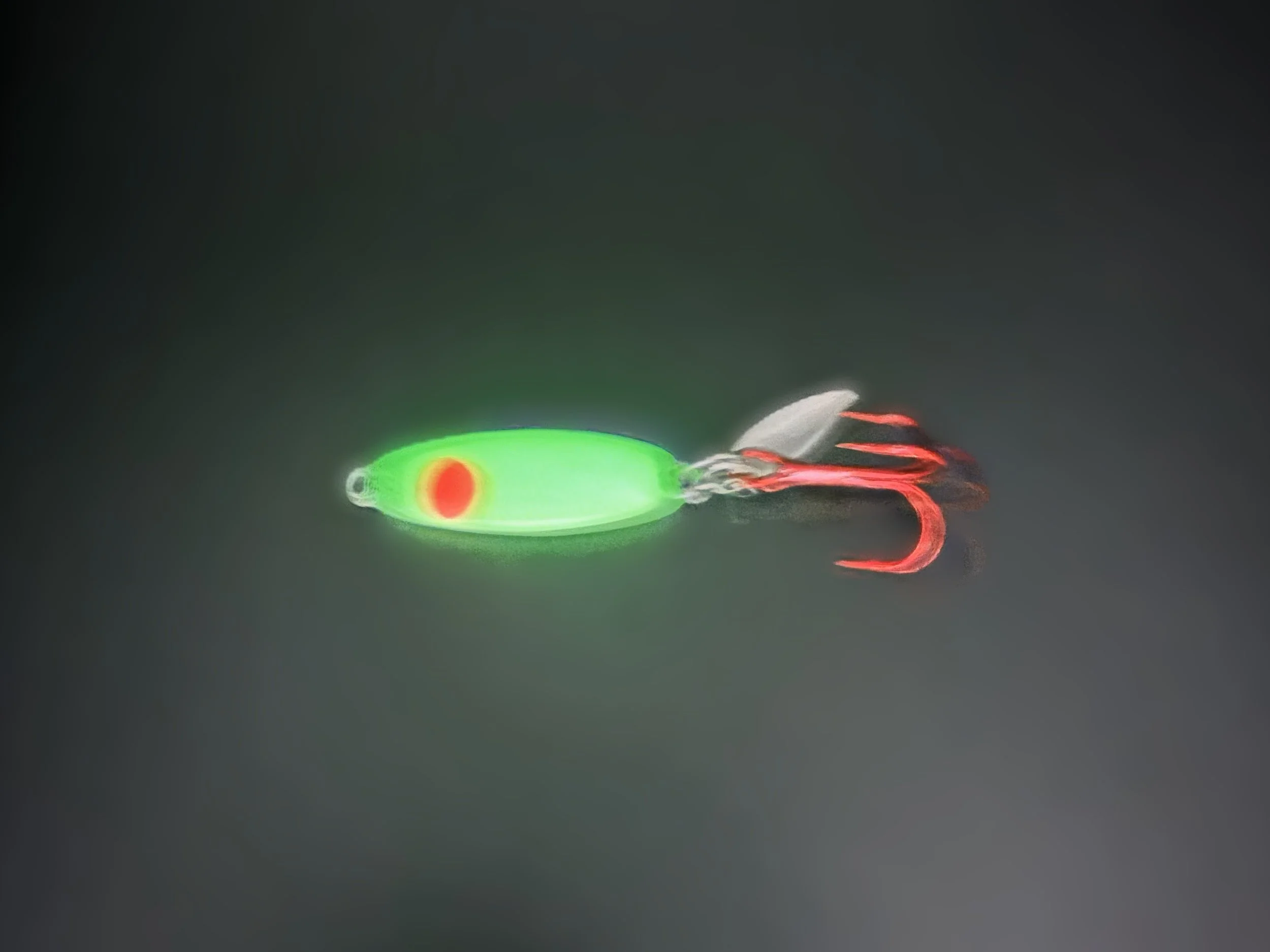
The Mud Bugg utilizes premium, high-intensity glow paint that holds a charge longer in frigid temperatures. Combined with color patterns proven on The Woods (like the classic "Pink Eye" glow shown above), this jig shines like a beacon in the abyss.
The Technique: Pounding the Mud
To maximize the Mud Bugg on this transition, use a "pound and pause" technique. Drop it rapidly to the bottom so it puffs up a cloud of silt—this gets the attention of nearby perch. Then, lift it a foot and rhythmically jig it to get that Ticker Blade clicking.
The perch will often swarm the silt cloud, and the walleyes will come in to investigate the clicking sound. When you feel that heavy weight, set the hook with confidence. The Mud Bugg is armed with a chemically sharpened #8 VMC Red Treble, providing the holding power needed for hard-mouthed 'eyes while being the perfect size for jumbo perch.
Don't let the mid-winter transition slow you down. Head to the mud line, drop a Mud Bugg, and start making some noise.
Interested? Check it out here —> XYRA 5G Mud Bugg